Precision Target pistol
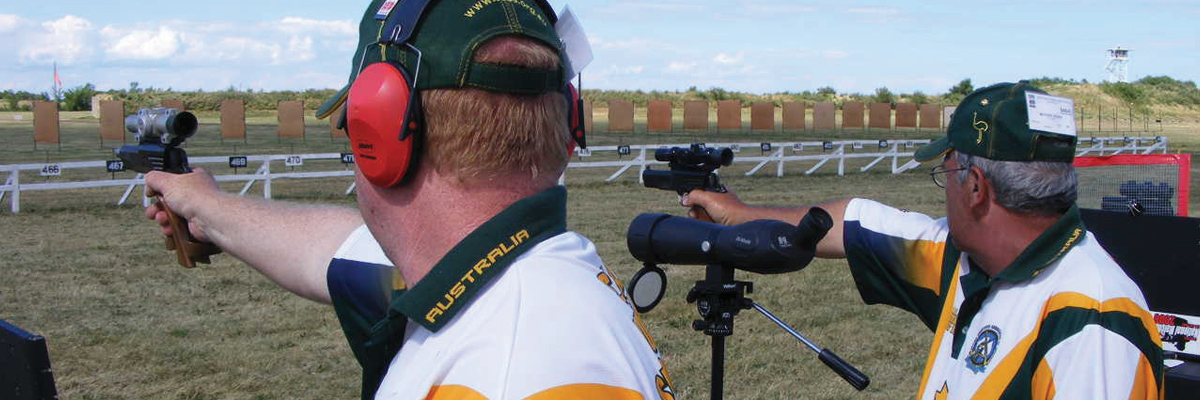
Precision Target Pistol is an international rimfire and centrefire revolver and self-loading pistol shooting discipline. There are six main classes and several side matches, with each based around the class of the handgun and ammunition used and many having their roots in different eras and types of service pistol shooting. The discipline includes four main matches: National Match Course, 900 Match Course, International Mayleigh Match, and Short Course Match, and competitors have varying time restrictions to shoot single-handedly in the standing position at paper targets placed at 25 and 50m.
History
Precision Target Pistol is the result of the SSAA adopting the American NRA Target Pistol match as its international target handgun discipline in 2005. The discipline itself is a single-handed handgun sport where shooters engage paper targets at 25 and 50m with a variety of handgun types and calibres.
Many of the matches have their roots in previous eras and types of service pistol shooting. Indeed, the discipline originated in the late 19th century as a means of training and competing with handguns. The Olympic Standard Pistol match traces its origins to an adaption of the NRA Standard .22 section, with the slow-fire stage brought back from 50 to 25 yards.
View the NRA Precision Pistol rule book for international rules.
Firearms and Classes
Precision Target Pistol comprises several main events and side matches, with each based around the class of handgun used. The use of telescopes or spotting scopes to spot shots is permitted. However, sighting shots are not permitted as part of the course of fire. All events are registered and graded via the National Discipline Chairman. Once shot, scores are sent in for registration and a graded copy is returned. The Chairman maintains the national grading register for all competitors.
Any .22-calibre Pistol or Revolver
This permits the use of any .22-calibre handgun using any .22 rimfire cartridge having an overall length of no more than 1.1″ or a projectile heavier than 40 grains. The handgun’s barrel length must be no longer than 10″ and the trigger pull weight must be no less than 2lb. Any sights including a telescopic or red dot sight may be used. Iron sights are to be no more than 10″ apart. Sights that project an image onto the target are not permitted.
These handguns may be shot in either the National Match Course (30 shots) or the full 900 Match (90 shots), which forms one half of the 1800 Aggregate Match principal event at National Championships.
Standard Smallbore Pistol .22-calibre Rimfire
This permits the use of any .22 rimfire pistol with metallic/iron sights only. The pistol’s trigger pull weight must be no less than 2lb. Orthopaedic grips are permitted. Standard Smallbore Pistol .22-calibre Rimfire is largely historical and is aimed at how Target Pistol was contested in its early days. With iron-sighted handguns such as the High Standard, Standard Smallbore Pistol .22-calibre Rimfire was superseded by Any .22-calibre Pistol or Revolver and is now largely shot as a side event at some State Championships and the National Postal Championships.
The basic rules for this event form the basis for other side events such as the Made in America Match, which is contested with US-manufactured handguns conforming to these rules, principally as a junior competition. The course of fire used for all variations is the National Match Course (30 shots).
International Mayleigh
This permits the use of the same handguns as used in the Any .22-calibre Pistol or Revolver event. The course of fire is 30 shots at 50m.
Distinguished Revolver
This permits the use of any revolver capable of chambering and firing a 158-grain round-nose or semi-wadcutter .38 Special cartridge. The revolver must be factory manufactured, with no external modifications. Stocks are to be factory or as near as possible to factory configurations, with a mirror-image left and right grip. Orthopaedic grips are not permitted. The revolver’s barrel length is to be no longer than 6.5″. Fixed or adjustable rear sights are permitted, but adjustable fore sights are not. The revolver’s trigger must have single- and double-action capability, and the trigger pull weight must be no less than 2.5lb when tested in single-action mode. Trigger shoes, compensators, tape or sticky substances on the stock and non-original triggerstops are not permitted.
Distinguished Revolver pays tribute to the revolver’s historical domination in police forces the world over. In the US, the event is very prestigious, with competitors vying to qualify for the Distinguished badge, which service personnel can wear as part of their uniform. The course of fire is the National Match Course.
Any Centrefire Pistol or Revolver
This permits the use of any .32-calibre (7.65mm) or larger centrefire handgun. The handgun’s barrel length including the cylinder is to be no longer than 10″ and the trigger pull weight is to be no less than 2.5lb. Any sights including a telescopic or red dot sight may be used. Iron sights are to be no more than 10″ apart. Sights that project an image onto the target are not permitted.
Any Centrefire Pistol or Revolver may be shot in the 30-shot National Match Course or the full 90-shot 900 Match Course. As a 900 Match Course, it forms the other half of the 1800 Aggregate Match at National Championships.
M9 Distinguished Service Pistol Match
This permits the use of a Beretta 92 9mm pistol of US-issue type or a commercial pistol of the same type and calibre. The handgun’s barrel length is to be between 4.9 and 5″, and the handgun’s overall length is to be between 8.52 and 8.62″. The sights are to be no more than 7.25″ apart. The stocks are to be no more than 1.5″ wide and may not be of a wraparound design. Tape may be used on the fore-strap or grip-rear, but may not be wrapped around the grip. The trigger pull weight is to be no less than 2.5lb. Any safe 9mm Parabellum load with a minimum 115-grain projectile may be used. The double-action capability of the firing mechanism must be operable. A long list of pistol modifications is permitted, including replacement barrels, slides and sights.
In the US, M9 Distinguished Service Pistol Match forms the Service Pistol match and may be shot with either a current-issue M9 Beretta 9mm or the previous standard 1911 .45 Auto in service-issue format. Due to restrictions on .45-calibre handguns in Australia, we limit this match to the M9 Beretta in 9mm.
This match is to military service personnel as to what the Distinguished Revolver match is to police officers. Once again, in the US, there is a Distinguished badge to be contested, which has a coveted place on a serving soldier’s uniform. There are also several side matches based on the M9 Beretta. The DCM match is shot using unaltered as-issued M9 handguns. The course of fire used for all variations is the National Match Course.
Open Revolver Match
This is an important side event, which uses an any sight .32- (7.65mm) to .38-calibre revolver with a maximum barrel length including its cylinder of 10″. The handgun barrel may be rebarrelled and fitted with custom grips, and the trigger weight is to be no less than 2.5lb.
Open Revolver Match includes a class of handgun that recreates the golden age of the revolver in the Any Centrefire Pistol or Revolver event, and is principally shot today in the Harry Reeves Memorial Match in the US. The course of fire is the National Match Course.
The rules specifically prohibit ‘custom shop’ models. When you see scores shot with Production and Open class handguns, you will observe the disparity that indicates the advantage that optical sights offer. This category will, however, get you going in Action Match for a minimal cost. Luckily, for Australian handgun competitors, there are a number of experienced custom gunsmiths who are capable of modifying a stock handgun to a serious competitive standard. These gunsmiths are conversant with Action Match rules and what can and can’t be done to your handgun to ensure compliance with those rules.
Course of Fire
Precision Target Pistol comprises several main events and side matches, with each based around the class of handgun used. The use of telescopes or spotting scopes to spot shots is permitted. However, sighting shots are not permitted as part of the course of fire. All events are registered and graded via the National Discipline Chairman. Once shot, scores are sent in for registration and a graded copy is returned. The Chairman maintains the national grading register for all competitors.
Any .22-calibre Pistol or Revolver
This permits the use of any .22-calibre handgun using any .22 rimfire cartridge having an overall length of no more than 1.1″ or a projectile heavier than 40 grains. The handgun’s barrel length must be no longer than 10″ and the trigger pull weight must be no less than 2lb. Any sights including a telescopic or red dot sight may be used. Iron sights are to be no more than 10″ apart. Sights that project an image onto the target are not permitted.
These handguns may be shot in either the National Match Course (30 shots) or the full 900 Match (90 shots), which forms one half of the 1800 Aggregate Match principal event at National Championships.
Standard Smallbore Pistol .22-calibre Rimfire
This permits the use of any .22 rimfire pistol with metallic/iron sights only. The pistol’s trigger pull weight must be no less than 2lb. Orthopaedic grips are permitted. Standard Smallbore Pistol .22-calibre Rimfire is largely historical and is aimed at how Target Pistol was contested in its early days. With iron-sighted handguns such as the High Standard, Standard Smallbore Pistol .22-calibre Rimfire was superseded by Any .22-calibre Pistol or Revolver and is now largely shot as a side event at some State Championships and the National Postal Championships.
The basic rules for this event form the basis for other side events such as the Made in America Match, which is contested with US-manufactured handguns conforming to these rules, principally as a junior competition. The course of fire used for all variations is the National Match Course (30 shots).
International Mayleigh
This permits the use of the same handguns as used in the Any .22-calibre Pistol or Revolver event. The course of fire is 30 shots at 50m.
Distinguished Revolver
This permits the use of any revolver capable of chambering and firing a 158-grain round-nose or semi-wadcutter .38 Special cartridge. The revolver must be factory manufactured, with no external modifications. Stocks are to be factory or as near as possible to factory configurations, with a mirror-image left and right grip. Orthopaedic grips are not permitted. The revolver’s barrel length is to be no longer than 6.5″. Fixed or adjustable rear sights are permitted, but adjustable fore sights are not. The revolver’s trigger must have single- and double-action capability, and the trigger pull weight must be no less than 2.5lb when tested in single-action mode. Trigger shoes, compensators, tape or sticky substances on the stock and non-original triggerstops are not permitted.
Distinguished Revolver pays tribute to the revolver’s historical domination in police forces the world over. In the US, the event is very prestigious, with competitors vying to qualify for the Distinguished badge, which service personnel can wear as part of their uniform. The course of fire is the National Match Course.
Any Centrefire Pistol or Revolver
This permits the use of any .32-calibre (7.65mm) or larger centrefire handgun. The handgun’s barrel length including the cylinder is to be no longer than 10″ and the trigger pull weight is to be no less than 2.5lb. Any sights including a telescopic or red dot sight may be used. Iron sights are to be no more than 10″ apart. Sights that project an image onto the target are not permitted.
Any Centrefire Pistol or Revolver may be shot in the 30-shot National Match Course or the full 90-shot 900 Match Course. As a 900 Match Course, it forms the other half of the 1800 Aggregate Match at National Championships.
M9 Distinguished Service Pistol Match
This permits the use of a Beretta 92 9mm pistol of US-issue type or a commercial pistol of the same type and calibre. The handgun’s barrel length is to be between 4.9 and 5″, and the handgun’s overall length is to be between 8.52 and 8.62″. The sights are to be no more than 7.25″ apart. The stocks are to be no more than 1.5″ wide and may not be of a wraparound design. Tape may be used on the fore-strap or grip-rear, but may not be wrapped around the grip. The trigger pull weight is to be no less than 2.5lb. Any safe 9mm Parabellum load with a minimum 115-grain projectile may be used. The double-action capability of the firing mechanism must be operable. A long list of pistol modifications is permitted, including replacement barrels, slides and sights.
In the US, M9 Distinguished Service Pistol Match forms the Service Pistol match and may be shot with either a current-issue M9 Beretta 9mm or the previous standard 1911 .45 Auto in service-issue format. Due to restrictions on .45-calibre handguns in Australia, we limit this match to the M9 Beretta in 9mm.
This match is to military service personnel as to what the Distinguished Revolver match is to police officers. Once again, in the US, there is a Distinguished badge to be contested, which has a coveted place on a serving soldier’s uniform. There are also several side matches based on the M9 Beretta. The DCM match is shot using unaltered as-issued M9 handguns. The course of fire used for all variations is the National Match Course.
Open Revolver Match
This is an important side event, which uses an any sight .32- (7.65mm) to .38-calibre revolver with a maximum barrel length including its cylinder of 10″. The handgun barrel may be rebarrelled and fitted with custom grips, and the trigger weight is to be no less than 2.5lb.
Open Revolver Match includes a class of handgun that recreates the golden age of the revolver in the Any Centrefire Pistol or Revolver event, and is principally shot today in the Harry Reeves Memorial Match in the US. The course of fire is the National Match Course.
Targets and Scoring
Precision Target Pistol comprises several main events and side matches, with each based around the class of handgun used. The use of telescopes or spotting scopes to spot shots is permitted. However, sighting shots are not permitted as part of the course of fire. All events are registered and graded via the National Discipline Chairman. Once shot, scores are sent in for registration and a graded copy is returned. The Chairman maintains the national grading register for all competitors.
Any .22-calibre Pistol or Revolver
This permits the use of any .22-calibre handgun using any .22 rimfire cartridge having an overall length of no more than 1.1″ or a projectile heavier than 40 grains. The handgun’s barrel length must be no longer than 10″ and the trigger pull weight must be no less than 2lb. Any sights including a telescopic or red dot sight may be used. Iron sights are to be no more than 10″ apart. Sights that project an image onto the target are not permitted.
These handguns may be shot in either the National Match Course (30 shots) or the full 900 Match (90 shots), which forms one half of the 1800 Aggregate Match principal event at National Championships.
Standard Smallbore Pistol .22-calibre Rimfire
This permits the use of any .22 rimfire pistol with metallic/iron sights only. The pistol’s trigger pull weight must be no less than 2lb. Orthopaedic grips are permitted. Standard Smallbore Pistol .22-calibre Rimfire is largely historical and is aimed at how Target Pistol was contested in its early days. With iron-sighted handguns such as the High Standard, Standard Smallbore Pistol .22-calibre Rimfire was superseded by Any .22-calibre Pistol or Revolver and is now largely shot as a side event at some State Championships and the National Postal Championships.
The basic rules for this event form the basis for other side events such as the Made in America Match, which is contested with US-manufactured handguns conforming to these rules, principally as a junior competition. The course of fire used for all variations is the National Match Course (30 shots).
International Mayleigh
This permits the use of the same handguns as used in the Any .22-calibre Pistol or Revolver event. The course of fire is 30 shots at 50m.
Distinguished Revolver
This permits the use of any revolver capable of chambering and firing a 158-grain round-nose or semi-wadcutter .38 Special cartridge. The revolver must be factory manufactured, with no external modifications. Stocks are to be factory or as near as possible to factory configurations, with a mirror-image left and right grip. Orthopaedic grips are not permitted. The revolver’s barrel length is to be no longer than 6.5″. Fixed or adjustable rear sights are permitted, but adjustable fore sights are not. The revolver’s trigger must have single- and double-action capability, and the trigger pull weight must be no less than 2.5lb when tested in single-action mode. Trigger shoes, compensators, tape or sticky substances on the stock and non-original triggerstops are not permitted.
Distinguished Revolver pays tribute to the revolver’s historical domination in police forces the world over. In the US, the event is very prestigious, with competitors vying to qualify for the Distinguished badge, which service personnel can wear as part of their uniform. The course of fire is the National Match Course.
Any Centrefire Pistol or Revolver
This permits the use of any .32-calibre (7.65mm) or larger centrefire handgun. The handgun’s barrel length including the cylinder is to be no longer than 10″ and the trigger pull weight is to be no less than 2.5lb. Any sights including a telescopic or red dot sight may be used. Iron sights are to be no more than 10″ apart. Sights that project an image onto the target are not permitted.
Any Centrefire Pistol or Revolver may be shot in the 30-shot National Match Course or the full 90-shot 900 Match Course. As a 900 Match Course, it forms the other half of the 1800 Aggregate Match at National Championships.
M9 Distinguished Service Pistol Match
This permits the use of a Beretta 92 9mm pistol of US-issue type or a commercial pistol of the same type and calibre. The handgun’s barrel length is to be between 4.9 and 5″, and the handgun’s overall length is to be between 8.52 and 8.62″. The sights are to be no more than 7.25″ apart. The stocks are to be no more than 1.5″ wide and may not be of a wraparound design. Tape may be used on the fore-strap or grip-rear, but may not be wrapped around the grip. The trigger pull weight is to be no less than 2.5lb. Any safe 9mm Parabellum load with a minimum 115-grain projectile may be used. The double-action capability of the firing mechanism must be operable. A long list of pistol modifications is permitted, including replacement barrels, slides and sights.
In the US, M9 Distinguished Service Pistol Match forms the Service Pistol match and may be shot with either a current-issue M9 Beretta 9mm or the previous standard 1911 .45 Auto in service-issue format. Due to restrictions on .45-calibre handguns in Australia, we limit this match to the M9 Beretta in 9mm.
This match is to military service personnel as to what the Distinguished Revolver match is to police officers. Once again, in the US, there is a Distinguished badge to be contested, which has a coveted place on a serving soldier’s uniform. There are also several side matches based on the M9 Beretta. The DCM match is shot using unaltered as-issued M9 handguns. The course of fire used for all variations is the National Match Course.
Open Revolver Match
This is an important side event, which uses an any sight .32- (7.65mm) to .38-calibre revolver with a maximum barrel length including its cylinder of 10″. The handgun barrel may be rebarrelled and fitted with custom grips, and the trigger weight is to be no less than 2.5lb.
Open Revolver Match includes a class of handgun that recreates the golden age of the revolver in the Any Centrefire Pistol or Revolver event, and is principally shot today in the Harry Reeves Memorial Match in the US. The course of fire is the National Match Course.
Target Pistol International Team Selection Criteria